Two meters that change everything
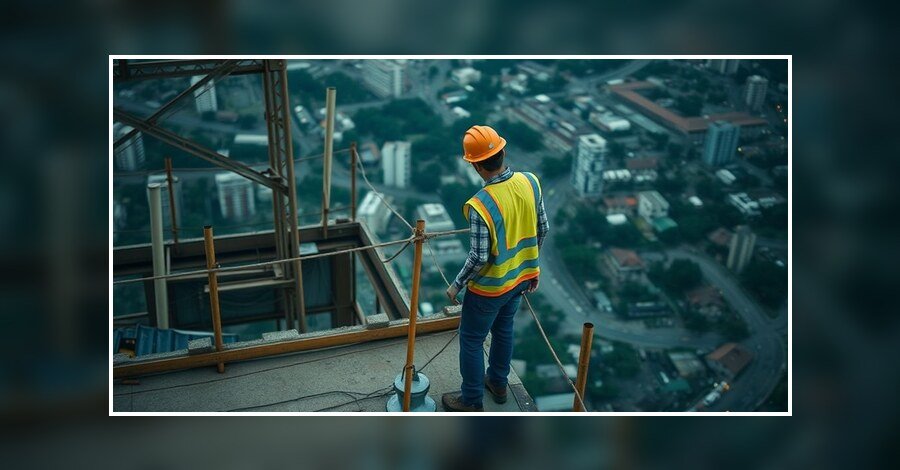
Once you’re working at 2 meters (about 6.5 feet) or higher with a risk of falling, the rules change — that’s what Brazil’s NR-35 standard defines as “work at height.” It sounds low, but a fall from that height is already enough to cause a serious injury. That’s why there’s a whole protocol before anyone climbs a ladder, scaffold, or roof.
Stop and think before you climb
Nobody should just “climb up and see how it goes.” A risk analysis has to happen first, checking what could go wrong up there — wind, a slippery surface, a weak anchor point. And the worker needs medical clearance specific to height work, not just a standard physical.
The gear that actually saves lives
- Full-body harness: spreads the impact force across the whole body instead of concentrating it in one spot.
- Lanyard with shock absorber: softens the jolt at the moment of a fall.
- Solid anchor point: everything else is useless if this one thing fails.
What if someone falls anyway?
That’s exactly why a rescue plan has to be ready, with trained people on standby — because someone suspended in a harness for too long is at serious risk even without hitting anything. Rescue needs to be fast; “we’ll figure it out later” isn’t a plan.
The golden rule
Work at height isn’t about being afraid of heights. It’s about respecting them. The people who respect the height are the ones who make it home in one piece.