
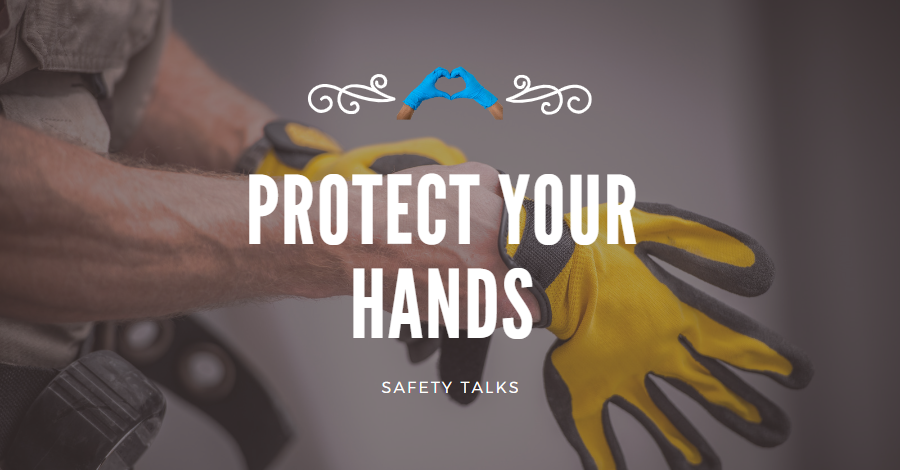
Protect Your Hands now!!!
It is important to protect your hands when using tools. This can be done by wearing gloves and protective gear.
Resposta rapida
Protect Your Hands: Protect Your Hands now!!! – Safety Talks: Para Protect Your Hands: Protect Your Hands now!!! – Safety Talks, comece pelo objetivo, revise os pontos criticos e use a tabela como checklist antes de executar.
Resumo em tabela
| Aspecto | Como aplicar | Por que importa |
|---|---|---|
| Objetivo | Entender o que precisa ser feito antes de agir. | Evita aplicacao fora de contexto. |
| Criterio | Separar pontos de atencao, requisitos e limites. | Ajuda a tomar decisoes mais consistentes. |
| Execucao | Aplicar em etapas e registrar o que foi feito. | Reduz erros e facilita revisao. |
| Revisao | Conferir resultado e corrigir desvios. | Mantem o conteudo util no uso real. |
Gloves should be form-fitting, flexible, and made of cut-resistant and abrasion-resistant materials.
Your hands will do everything your brain tells them to do, so turn on your brain, slow it down first, and review the hazards of each task, no matter how long you’ve been doing your job or you’ve been doing the same.
How long have you been tasked at work, staying focused and following the four basic principles of hand safety? The first is pinch points ladder place.
Take care every time you pinch the second is proper gloves your hands can get cuts, burns, bruises and other injuries handling sharp materials can cause cuts using certain materials can cause scratches and skin.
Cracks and hot surfaces can cause burns Metal splinters and wood get a work-friendly sheen.
Check your gloves before each use, for Protect Your Hands.
Gloves that fall apart or have rips or tears do not provide good protection
Machine Guards Machine guards prevent accidental contact with moving parts.
Do not take them off or bypass them.
Machine guards on portable equipment like lawn mowers and handsaws keep you from chopping off your fingers.
More recommendation
For the same reason floor standing machines have guards and make sure they are properly locked before attempting any maintenance.
Do not wear metal jewelry such as rings, wedding bands or necklaces to work
A machine in normal everyday use. Know the general hazards in normal everyday use.
For example, do not pick up broken glass or sharp objects with your bare hands. Protect your hands when handling chemicals.
Do not sweep up wood chips, glass, metal shards, shavings or other related materials.
Remember, use your brain first and then Hands down, thanks for watching and have a safe day.
NOTE: Safety Talks are important HSE management tools, in addition, they have the function of instructing employees before starting their work activities.
IMPORTANT: The content is merely suggestive and designed for the reality of a theoretical service front. Thus, all Safety Talks are generic, so they must be adapted to the reality of the work fronts by the HSE professional (Safety, Environment and Health) or leaders of the company or sectors. The responsibility of the Safety Talks is exclusively the person who will be carrying out the dialogue on the work fronts!!!
Perguntas frequentes
Para quem este guia e indicado?
Para quem precisa de uma explicacao pratica, organizada e facil de consultar antes de aplicar o tema.
Como usar melhor este conteudo?
Comece pela resposta rapida e pela tabela, depois leia as secoes de detalhes e perguntas frequentes.
Posso adaptar as orientacoes?
Sim, desde que a adaptacao preserve o objetivo, os criterios e os cuidados principais apresentados.
Leia tambem
- Toolbox Talk – Noise Control at Work: Why Your Hearing is Worth More Than Gold
- Toolbox Talk – Safety with Power Tools: How Not to Become a Work Statistic
- Toolbox Talk – The Great Battle of Masks: PFF2, N95, KN95 – What’s the Real Difference?
- Safety Toolbox Talk – Form F-SMS-001: The Essential Tool for Safety Training Control
- Guias e Temas Principais
Guia central: veja tambem Guias e Temas Principais.

Conteudos relacionados
Confined Space Entry: Key Hazards and Safety Precautions
Confined space work remains one of the leading causes of severe and fatal injuries in industrial and construction…
Workplace health Guide: Practical Steps for Safety
This article was created to strengthen the Safety category and expand the editorial coverage of workplace safety, health…
Toolbox talk Plan: Controls, Records and Follow-up
This article was created to strengthen the Safety category and expand the editorial coverage of workplace safety, health…

Emergency response Toolbox Guide for Supervisors and Teams
This article was created to strengthen the Safety category and expand the editorial coverage of workplace safety, health…