

Objects falling from the sky and striking people can cause severe industrial injuries and deaths. Many people are killed every year by objects falling from the sky. Some of these fallen objects are construction materials, tools or equipment dropped by the sky god.
Resposta rapida
14 Tips to Prevent Falling Objects: How can we avoid objects that fall?: Para 14 Tips to Prevent Falling Objects: How can we avoid objects that fall?, comece pelo objetivo, revise os pontos criticos e use a tabela como checklist antes de executar.
Resumo em tabela
| Aspecto | Como aplicar | Por que importa |
|---|---|---|
| Objetivo | Entender o que precisa ser feito antes de agir. | Evita aplicacao fora de contexto. |
| Criterio | Separar pontos de atencao, requisitos e limites. | Ajuda a tomar decisoes mais consistentes. |
| Execucao | Aplicar em etapas e registrar o que foi feito. | Reduz erros e facilita revisao. |
| Revisao | Conferir resultado e corrigir desvios. | Mantem o conteudo util no uso real. |
Many preventative measures involve implementing toe boards with mesh and wire-netting guardrails. These guardrails eliminate the potentially severe consequences of materials, tools and objects falling from elevated platforms or walkways.
How can we avoid objects that fall?
What precautions can be taken to prevent accidents? Work performed overhead requires extra care.
Before beginning a mission that requires an overhead view, use signs, barricades, and radio communication to announce the upcoming mission.
Avoid climbing ladders with tools or materials in tow by using a tool belt, a bucket holder or other means of carrying. Instead, opt for a line to help lift items up.
Ensure tools or materials are secure when hoisted before using a handling.
In order to prevent objects from falling off the scaffolding, add toe boards to construction platforms and the scaffolding.
Don’t toss useful objects or tools.
Ensure that the weight is equally distributed across both hands before lifting.
Material and tools should stay away from the edges of ladder rungs, platforms and windowsills.
Tools dropped out of pockets when people bend over or extend their arms.
Store materials and tools that aren’t in use on the highest shelf. Keep a clean work space on the overhead task by mastering proper housekeeping.
Before starting a job involving falling objects, make sure the area below is cleared. Post warning signs and rope off the area.
Before someone gets injured, find these hazards and fix them before you look away.
Avoid dropping objects by landing on your feet.
Studying the Toolbox Talk will help you feel more confident and comfortable when speaking about your topic.
Use the Toolbox Talk to discuss tasks, jobs or events that relate to your workplace.
Encourage discussion by asking questions and sharing worker opinions.
Safety with boards and boards.
Suggested topics for class discussion in the Toolbox include the Toolbox’s supply of educational tools.
Do pallets stack appropriately?
Incoming objects could potentially fall from above. Are any heavy objects precariously balanced?
You are walking under a heavy weight or lift?
Does something massive hang from a pole in the distance?
Is there a loose plank on a high shelf?
NOTE: Safety Talks are important HSE management tools, in addition, they have the function of instructing employees before starting their work activities.
IMPORTANT: The content is merely suggestive and designed for the reality of a theoretical service front. Thus, all Safety Talks are generic, so they must be adapted to the reality of the work fronts by the HSE professional (Safety, Environment, and Health) or leaders of the company or sectors. The responsibility of the Safety Talks is exclusively the person who will be carrying out the dialogue on the work fronts!!!
Perguntas frequentes
Para quem este guia e indicado?
Para quem precisa de uma explicacao pratica, organizada e facil de consultar antes de aplicar o tema.
Como usar melhor este conteudo?
Comece pela resposta rapida e pela tabela, depois leia as secoes de detalhes e perguntas frequentes.
Posso adaptar as orientacoes?
Sim, desde que a adaptacao preserve o objetivo, os criterios e os cuidados principais apresentados.
Leia tambem
- Toolbox Talk – Noise Control at Work: Why Your Hearing is Worth More Than Gold
- Toolbox Talk – Safety with Power Tools: How Not to Become a Work Statistic
- Toolbox Talk – The Great Battle of Masks: PFF2, N95, KN95 – What’s the Real Difference?
- Safety Toolbox Talk – Form F-SMS-001: The Essential Tool for Safety Training Control
- Guias e Temas Principais
Guia central: veja tambem Guias e Temas Principais.

Conteudos relacionados

Workplace health Guide: Practical Steps for Safety
This article was created to strengthen the Safety category and expand the editorial coverage of workplace safety, health…
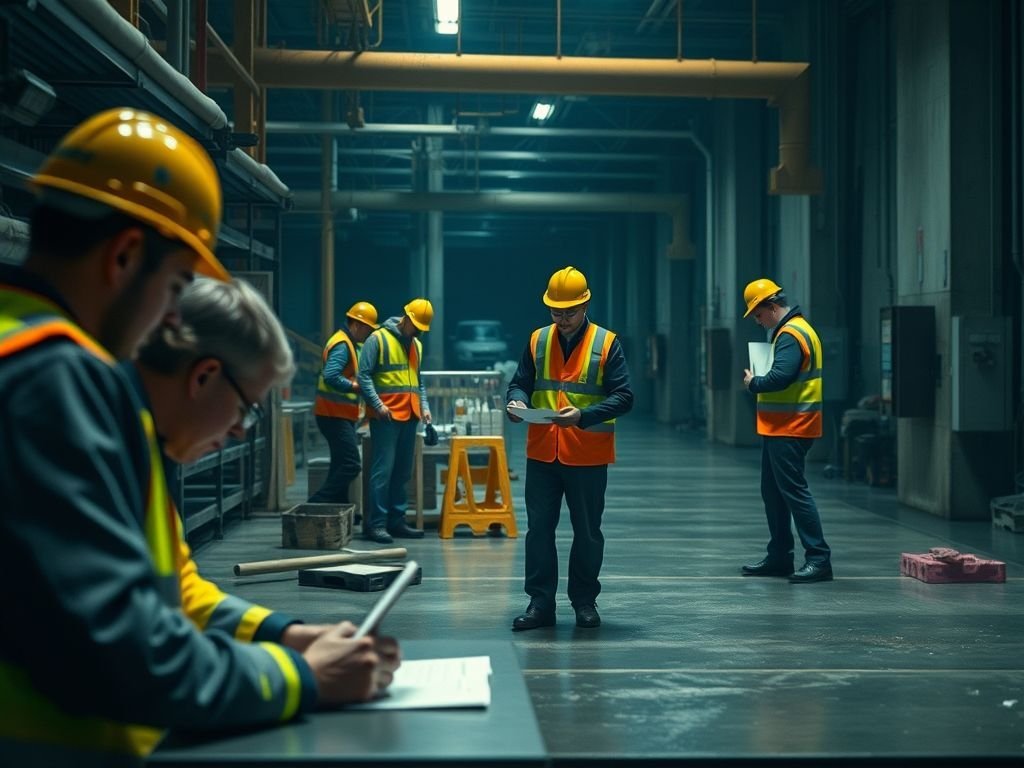
Toolbox talk Plan: Controls, Records and Follow-up
This article was created to strengthen the Safety category and expand the editorial coverage of workplace safety, health…

Emergency response Toolbox Guide for Supervisors and Teams
This article was created to strengthen the Safety category and expand the editorial coverage of workplace safety, health…

Risk assessment Checklist: What to Verify Before You Start
This article was created to strengthen the Safety category and expand the editorial coverage of workplace safety, health…