
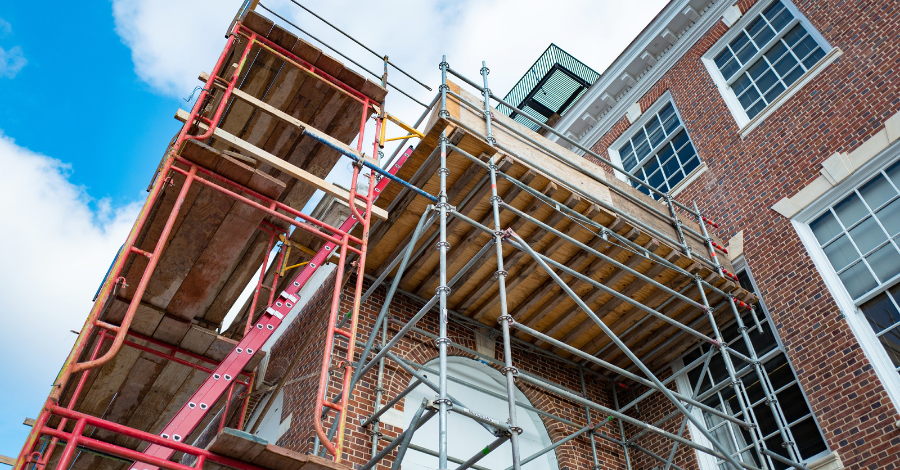
A fall can lead to serious injury or death when boards fail on a scaffold. Causing insult to a scaffold by using boards can severely damage the structure.
By mishandling tools or materials, you can injure yourself.
Improperly or excessively built wood may fall apart. Wood can also break apart if it is overburdened or untied.
Skaffold components must be completely planed if they’re not to cause offense during the erection and dismantling processes as well as when they’re in regular use.
Resposta rapida
Scaffolding Safety – Planks and decks: Para Scaffolding Safety – Planks and decks, comece pelo objetivo, revise os pontos criticos e use a tabela como checklist antes de executar.
Resumo em tabela
| Aspecto | Como aplicar | Por que importa |
|---|---|---|
| Objetivo | Entender o que precisa ser feito antes de agir. | Evita aplicacao fora de contexto. |
| Criterio | Separar pontos de atencao, requisitos e limites. | Ajuda a tomar decisoes mais consistentes. |
| Execucao | Aplicar em etapas e registrar o que foi feito. | Reduz erros e facilita revisao. |
| Revisao | Conferir resultado e corrigir desvios. | Mantem o conteudo util no uso real. |
How can I avoid being stung by insects?
Inspecting safety net equipment requires expert tools.
Ensure all wood planks are checked for cracks, defects or low quality wood prior to mounting them.
Regularly inspect wood materials and the scaffold planks they use. When doing so, look for these symptoms:
With wooden planks.
A plank needs to extend at least 150 millimeters — or 6 inches — out from the frame. The maximum thickness of a plank is 300 millimeters — or 12 inches.
Finding cracks at the ends of tables usually means replacing the wood with new planks. For tables with long, deep cracks, opt for alternative options.
Look for jagged edges on check planks. Trim any rough edges or gouges from boards with many cuts.
Dry rot is typically light weight and hard to recognize.
Discard wood that has noticeable nail holes, board edges split or wormholes appearing through it. Also discard wood with large knots and cracks.
You need to replace broken cleats.
Safety precautions should include an extension ladder.
A laminated wooden veneer plank is used as a substitute for wood board walls.
Changes in dry and wet mix levels cause the layered material to separate.
No matter the size, any wound cuts off any hope for recovery.
A fissure appears in the upper or lower layer of pressure.
Changes occur as a result of regular use and exposure to weather.
Studs with significant damage.
Electrical hazards exist with temporary lighting.
The safety of scaffolding relies on its completion.
Crew can inspect sample materials onsite to determine panel and plank inspection methods.
Before employees start working, providing them with safety talks is a helpful HSE management tool.
The generic Safety Talks must be adapted to the work front by a Health, Safety, or Environment professional (such as a company leader or specialist) or the front’s leaders. The content is only intended to represent a theoretical service front; it is not supposed to contain actual information. Only the one who is engaged in dialogue concerning work must assume responsibility for Safety Talks!
Perguntas frequentes
Para quem este guia e indicado?
Para quem precisa de uma explicacao pratica, organizada e facil de consultar antes de aplicar o tema.
Como usar melhor este conteudo?
Comece pela resposta rapida e pela tabela, depois leia as secoes de detalhes e perguntas frequentes.
Posso adaptar as orientacoes?
Sim, desde que a adaptacao preserve o objetivo, os criterios e os cuidados principais apresentados.
Leia tambem
- Toolbox Talk – Noise Control at Work: Why Your Hearing is Worth More Than Gold
- Toolbox Talk – Safety with Power Tools: How Not to Become a Work Statistic
- Toolbox Talk – The Great Battle of Masks: PFF2, N95, KN95 – What’s the Real Difference?
- Safety Toolbox Talk – Form F-SMS-001: The Essential Tool for Safety Training Control
- Guias e Temas Principais
Guia central: veja tambem Guias e Temas Principais.

Conteudos relacionados
Confined Space Entry: Key Hazards and Safety Precautions
Confined space work remains one of the leading causes of severe and fatal injuries in industrial and construction…

Workplace health Guide: Practical Steps for Safety
This article was created to strengthen the Safety category and expand the editorial coverage of workplace safety, health…

Toolbox talk Plan: Controls, Records and Follow-up
This article was created to strengthen the Safety category and expand the editorial coverage of workplace safety, health…

Emergency response Toolbox Guide for Supervisors and Teams
This article was created to strengthen the Safety category and expand the editorial coverage of workplace safety, health…